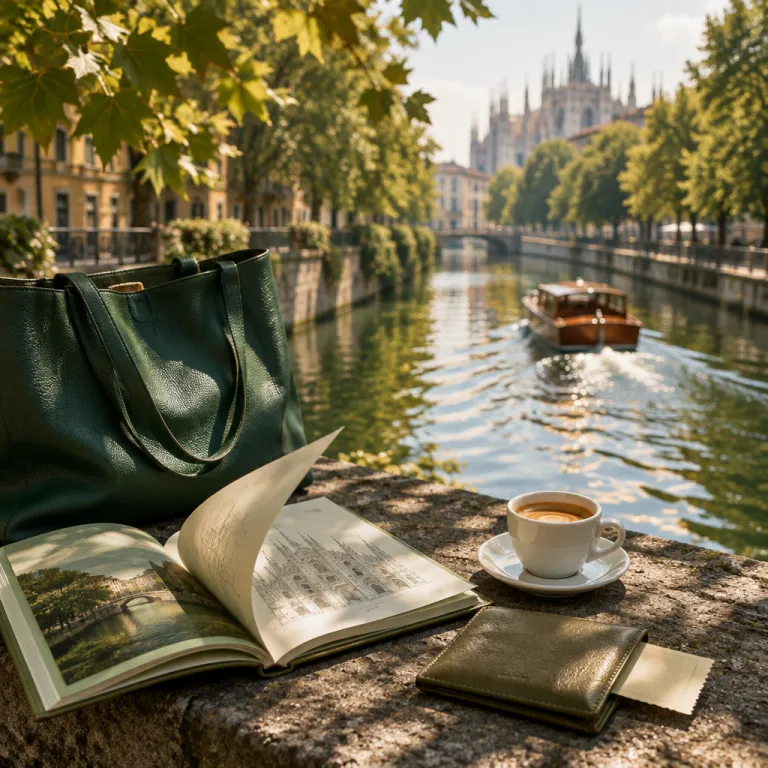
Designing a Milan itinerary around the Duomo and the historic heart
Begin your first day in Milan in the shadow of the Duomo, because this cathedral defines the skyline and sets the tone for everything that follows. Many travellers list the Duomo among the best things to see in Milan Italy, yet few take the time to climb to the rooftop terraces where 135 spires and marble carvings reveal the city from a different angle. Plan at least half a day in and around Piazza del Duomo so you can move at an unhurried pace and still feel you have used your time well; two to three hours is a realistic minimum for the interior, museum, and rooftop.
From the main Piazza del Duomo, step directly into the Galleria Vittorio Emanuele II, the 19th century arcade that links the cathedral to La Scala and anchors central Milan. Under the glass dome of the Galleria Vittorio Emanuele II, pause for an espresso and watch the flow of the city center, then walk the polished mosaics that lead to some of the top fashion houses in Italy. This is where many visitors realise that the best things to do in Milan are not only about ticking off sights, but about absorbing how history, commerce, and daily life share the same elegant space; the nearest metro stop, Duomo on lines M1 and M3, makes it easy to return at quieter hours.
When you visit Milan for the first time, reserve timed tickets for the cathedral interior and the rooftop so your Milan itinerary remains smooth. Official guidance from the tourism board is clear: “Book tickets in advance” and “Check opening hours,” and following this advice will save you from long queues in the heat of the day; typical opening times run from early morning to early evening, with last entry about an hour before closing. After your visit to the Duomo di Milano, take a short walk through the surrounding streets of the historic center, where quieter churches and courtyards offer a calmer side of the city that many people miss during a quick Milan day trip.
Opera, art and Brera: cultural things to do in Milan near your hotel
For travellers choosing a hotel in Milan Italy, proximity to La Scala and the Brera district can transform an ordinary stay into a cultural immersion. Teatro alla Scala, often simply called Scala, is one of the top opera houses in the world, and attending an opera or ballet here is among the most memorable things Milan can offer. Even if you do not secure evening tickets, a daytime visit to the Scala museum and auditorium still gives a sense of the city’s artistic heritage and performance traditions; allow at least an hour for the museum and another for a guided visit if available.
Just a short walk from Scala lies Brera, a neighbourhood where cobbled streets, galleries, and refined cafés create a village atmosphere in the middle of the city center. The Pinacoteca di Brera houses masterpieces of Italian art, making it a cornerstone of any Milan itinerary focused on culture and history. When you plan your days in Milan, alternate intense museum visits with slower strolls through Brera’s side streets, where you will find independent shops, wine bars, and small restaurants that feel far removed from the crowds around Piazza del Duomo; the Lanza and Montenapoleone metro stops on line M2 and M3 are convenient access points.
Opera lovers who stay near central Milan can easily combine a late performance at Scala with an earlier visit to the Duomo or to Castello Sforzesco, adjusting their Milan day so that walking distances remain comfortable. Remember that guided tours are widely available; “Are guided tours available in Milan?” is answered simply with “Yes, various guided tours are offered for major attractions,” which means you can rely on expert commentary at La Scala, the Duomo, and the main art museums. When you visit Milan with limited time, these curated experiences help you understand how opera, sacred art, and civic power have shaped the city over many centuries, without spending hours on background reading.
Castello Sforzesco, Leonardo da Vinci and refined green spaces
Beyond the Duomo and Scala, one of the best things to do in Milan is to spend a morning at Sforzesco Castle, known locally as Castello Sforzesco. This 15th century fortress, now more than 600 years old, anchors the northwestern edge of the historic city center and houses several museums that range from Renaissance art to musical instruments. When you visit the castle, allow enough time to cross its courtyards, explore at least one museum collection, and then continue into the green expanse of Parco Sempione behind it; most guests find that two to three hours covers a first visit comfortably.
Castello Sforzesco is closely linked to the legacy of Leonardo da Vinci, who worked for the Sforza family and contributed to the city’s engineering and artistic projects. Many travellers associate Leonardo da Vinci primarily with his famous mural of the Last Supper at Santa Maria delle Grazie, yet his influence on Milan extends far beyond that single work. A thoughtful Milan itinerary will balance a timed visit to the Last Supper by Leonardo da Vinci with unhurried time in the castle museums, where you can appreciate sculpture, tapestries, and architectural fragments that reveal how the city evolved from medieval stronghold to modern metropolis; the Cadorna and Cairoli metro stations on lines M1 and M2 are the closest major stops.
Hotel guests who value calm often choose properties within a short walk of Parco Sempione, because this area offers easy access to Castello Sforzesco while remaining quieter than streets directly around Piazza del Duomo. From here, you can design a day in Milan that begins with a castle visit, continues with a picnic or café stop in the park, and ends with an evening drink back in the city center. Such days in Milan Italy feel balanced, giving you both structured cultural experiences and open time to enjoy the city’s more relaxed side; locals often suggest entering the park near the Arco della Pace in late afternoon, when the light is soft and the outdoor terraces begin to fill.
Navigli district and Porta Nuova: from canals to modern skyline
Not all the essential things to do in Milan revolve around churches and palaces, and the Navigli district proves this with its lively canalside atmosphere. Once a working network of waterways, the Navigli canals now frame one of the city’s most engaging evening quarters, filled with restaurants, bars, and design studios. When you visit Milan for several days, reserve at least one evening for the Navigli district, where aperitivo by the water becomes a ritual rather than a simple drink; the Porta Genova and Romolo metro stations on line M2 are the usual gateways.
During the day, Navigli offers a different mood, with antique markets on certain days and quiet towpaths that invite a reflective short walk away from the intensity of central Milan. Many travellers consider the canals among the best things Milan can offer in terms of people watching, especially when the light softens and the reflections of the houses ripple on the water. If your hotel lies in the city center, you will reach Navigli easily by tram or metro, making it a practical addition to any Milan day without sacrificing too much time in transit; plan around 20 to 30 minutes each way from Piazza del Duomo depending on connections.
In contrast to the historic canals, the Porta Nuova district showcases the modern face of Milan Italy, with glass towers, elevated parks, and bold contemporary architecture. A well planned Milan itinerary will include both Navigli and Porta Nuova, so you can experience how the city balances heritage with innovation in a single stay. This contrast between old and modern quarters is one of the top reasons many guests extend their days in Milan, using the city as more than just a stopover on the way to Venice or other Italian destinations; the Garibaldi and Repubblica stations on lines M2, M3, and suburban trains make the skyline easy to reach.
Planning day trips and structuring your Milan day around your hotel
For guests staying three or more days in Milan, a carefully structured schedule will help you experience both the city and its surroundings without feeling rushed. Many travellers use one full Milan day for the Duomo, Galleria Vittorio Emanuele II, and Scala, another for Castello Sforzesco and Brera, and a third for Navigli and Porta Nuova. If you have additional days in Milan Italy, consider a day trip by train to Venice, using Milan as a comfortable base rather than repacking every night; high speed services from Milano Centrale typically take around two and a half hours.
When you visit Milan with a focus on comfort, choose a hotel in or near the city center so that most major sights remain within a short walk or a brief metro ride. This central Milan location allows you to return to your room between activities, which is especially valuable on hot days or after intensive museum visits. It also means that early morning or late evening visits to the Duomo, Piazza del Duomo, or the Galleria Vittorio Emanuele II become easy, giving you access to some of the best things to see at quieter times; many concierges suggest entering the cathedral within the first hour of opening or after 5 p.m. to avoid peak tour groups.
Concierge teams in quality hotels across Milan Italy are increasingly skilled at building personalised itineraries that reflect your interests, whether you prioritise art, opera, shopping, or food. They will often suggest specific time slots for the Duomo interior and rooftop, for the Last Supper by Leonardo da Vinci at Santa Maria delle Grazie, and for performances at Scala, aligning these with restaurant reservations and transport schedules. This kind of tailored planning turns a simple list of things to do in Milan into a coherent narrative, where each Milan day feels distinct yet connected to the rhythm of the city; a good rule of thumb is to anchor each day around one major timed entry and one flexible neighbourhood.
Milan focused concierge itineraries for discerning hotel guests
One of the most valuable services for someone booking a hotel in Milan is a concierge team that understands how to translate broad lists of things to do in Milan into precise, hour by hour plans. In practice, this means mapping your arrival time, your preferred pace, and your cultural interests against the opening hours of the Duomo, Castello Sforzesco, and the main art museums. The result is a Milan itinerary where each day in the city has a clear focus, yet still leaves space for spontaneous café stops or unplanned walks through lesser known piazzas; many guests appreciate having one “empty” late afternoon built into the schedule for this purpose.
For example, a concierge might design a central Milan day that begins with an early visit to the Duomo and the Galleria Vittorio Emanuele II, followed by a guided tour of Scala and an afternoon in Brera. Another day could revolve around Sforzesco Castle and Parco Sempione, with an evening transfer to the Navigli district for aperitivo and dinner along the canals. A third day might highlight the modern skyline of Porta Nuova, balanced with a late afternoon return to the city center for shopping or a final opera performance; this structure keeps walking times reasonable while still covering the main districts.
Such Milan focused concierge itineraries are particularly helpful for guests who also plan to visit Venice or other Italian cities during the same trip, because they ensure that time in Milan Italy is used with intention. By coordinating tickets for the Last Supper by Leonardo da Vinci, advising on the best things to see at each site, and arranging transport between the city center and outlying districts, the concierge will remove friction from your stay. In a city where there are many overlapping things Milan can offer in a short period, this expert guidance turns a potentially overwhelming list into a refined sequence of experiences that align with your personal style and preferred pace.
Key figures that shape a refined stay in Milan
- The Duomo di Milano welcomes around 5,000,000 visitors each year, according to recent estimates from the Milan Tourism Board, which means early morning or late evening time slots are often the most comfortable for hotel guests seeking quieter experiences.
- The Galleria Vittorio Emanuele II hosts approximately 150 shops and cafés, based on data published by the arcade’s management company, giving travellers a dense concentration of luxury retail and dining options within a few hundred metres of Piazza del Duomo.
- Sforzesco Castle has stood for roughly 600 years, as confirmed by historical records held in the civic archives, so a visit there connects your modern city break to half a millennium of political and artistic history in Milan Italy.
- Tourism authorities highlight that Milan is a year round destination, yet they note that spring and autumn offer pleasant weather and fewer crowds, making these seasons particularly suitable for guests planning multi day Milan itineraries that combine indoor and outdoor experiences.
FAQ: practical questions about things to do in Milan
What is the best time to visit Milan for sightseeing ?
Spring and autumn offer pleasant temperatures and lighter crowds, which makes it easier to enjoy the Duomo, Castello Sforzesco, and the Navigli district without long queues. During these seasons, hotel rates in central Milan can still be competitive compared with peak trade fair periods. If you must visit Milan in high summer, plan indoor art visits during the hottest hours and reserve rooftop or canal side experiences for early morning or evening; many museums open around 9:00 or 10:00 and close between 17:00 and 19:00, but always confirm exact times before you travel.
Are guided tours necessary for the Duomo and the Vinci Supper ?
Guided tours are not mandatory, but they add significant depth to complex sites such as the Duomo and the Last Supper by Leonardo da Vinci. Official information confirms that “Yes, various guided tours are offered for major attractions,” which means you can choose between group and private formats. Many hotels in Milan Italy work with trusted local operators, so asking your concierge to arrange these tours is often the most efficient approach; they can also advise on typical tour durations, which usually range from one to two hours.
Is public transportation reliable for reaching Navigli and Porta Nuova ?
Milan’s metro and tram network is efficient and reliable, making it straightforward to travel between the city center, the Navigli district, and Porta Nuova. The official assessment is clear: “Yes, Milan has an efficient public transportation system,” which aligns with the experience of frequent visitors. For late evening returns from Navigli, many guests prefer licensed taxis or ride hailing services, especially if their hotel lies in a quieter residential area; journey times from the canals back to central Milan are typically under 25 minutes.
How many days in Milan are ideal before continuing to Venice ?
For travellers who plan to visit Venice as well, three full days in Milan is usually the minimum to experience the Duomo, Galleria Vittorio Emanuele II, Scala, Castello Sforzesco, Brera, and Navigli at a comfortable pace. Four or five days in Milan Italy allow for a more relaxed rhythm, including time in Porta Nuova and perhaps a half day dedicated to shopping. Using Milan as a base for a day trip to Venice is possible by high speed train, but many guests prefer at least one overnight stay in each city so that evenings are not dominated by travel.
Where should I book a hotel to access the best things to do in Milan ?
For most visitors, staying in or near the historic city center around Piazza del Duomo, Brera, or Scala offers the best balance of convenience and atmosphere. From these areas, you can reach the Duomo, Galleria Vittorio Emanuele II, Castello Sforzesco, and many top restaurants within a short walk or a brief metro ride. Guests who prioritise nightlife may prefer locations closer to the Navigli district, while those interested in contemporary architecture often choose hotels near Porta Nuova for easy access to the modern skyline and business district.
References
- Milan Tourism Board
- Galleria Vittorio Emanuele II Management
- Historical Archives of Castello Sforzesco